


Stress management is not about staying calm all the time. It is about recognising what is putting pressure on you, making changes where possible, and finding ways to recover. A breathing exercise can help with a difficult moment; an unrealistic workload may need a different solution.
This guide combines short coping exercises, practical workday changes, and a simple weekly plan. Choose what is useful rather than trying to turn every suggestion into another obligation. This is general information, not a diagnosis or an individual treatment plan.
Key takeaways
- Use a small reset when you feel overwhelmed, without expecting guaranteed instant relief.
- Separate problems you can act on from things outside your control.
- Address workload and support needs as well as personal coping habits.
- Get professional help if stress or anxiety is persistent or disrupting everyday life.
In this guide
- Understand your stress
- A short reset for stressful moments
- Manage work demands and boundaries
- Build habits that support recovery
- Create a realistic weekly plan
- Questions and when to get help
Understand your stress
Stress often follows an identifiable demand: a deadline, financial uncertainty, caring responsibilities, or conflict. Anxiety can persist even when there is no immediate threat. They can overlap, and you do not need to work out a diagnosis before asking for support. NIMH explains the distinction between stress and anxiety.
Notice your own early warning signs. They might include a tight jaw, rushing through tasks, irritability, trouble switching off, or repeatedly checking messages. These observations are a prompt to pause, not proof that stress is the only cause of a symptom.
Try a three-column stress audit
| Demand | What is in my control? | One next action |
|---|---|---|
| Too many deadlines | Clarify priorities and available time | Ask which task can move |
| Money worries | Gather accurate information | Make a list of payments and seek relevant advice |
| Constant notifications | Change nonessential alerts | Protect one short focus period |
If a problem is changeable, use practical problem-solving. If it is not immediately changeable, focus on support and recovery. Coping skills should not be used to make unsafe, unfair, or unsustainable circumstances acceptable.
A short reset for stressful moments
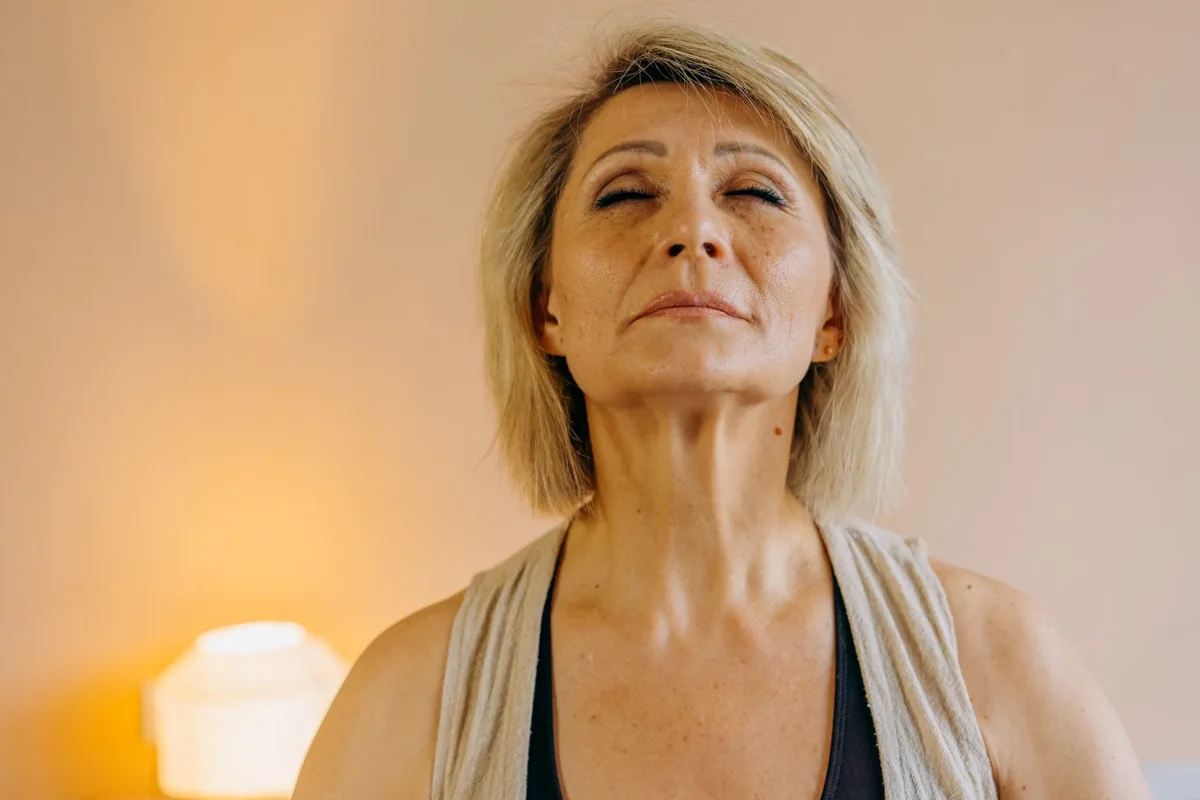
1. Find a comfortable breathing rhythm
- Sit or stand with support and let your shoulders settle.
- Breathe gently through your nose if comfortable, then out slowly. Do not force large breaths.
- Use an easy count if it helps, but skip breath holds and rigid timing if they feel uncomfortable.
- Continue briefly and return to normal breathing if you feel lightheaded or more anxious.
The NHS breathing exercise guide offers an approachable routine. Practice when relatively settled so you are familiar with it before a demanding moment. Do not practise an attention-demanding exercise while driving or using equipment.
2. Reorient to the room
Name a few things you can see, feel the support beneath your feet, and notice one sound. You can use the familiar five-things-you-see, four-you-feel, three-you-hear sequence, but the exact numbers are not important. Use whichever senses are available and comfortable.
3. Release tension gently
If comfortable, lightly tighten your hands for a few seconds and then let go. Repeat with another muscle group, avoiding painful or injured areas. Simply relaxing without tensing is also an option. NCCIH describes progressive relaxation and its limitations; it is not a replacement for treatment when that is needed.
4. Choose a manageable next step
Ask, “What is the next useful action, not the entire solution?” That might be writing one sentence, making one call, getting a drink, or requesting more time. If you are stuck, write the step down and ask someone to help you prioritise.
Manage work demands and boundaries

A planning method is helpful only if it reflects your actual workload. Sort tasks into what needs attention now, what can be scheduled, what needs clarification, and what can be declined or delegated. Leave space for interruptions instead of filling every minute.
- Clarify priorities: “I can finish A or B today. Which should take priority?”
- Negotiate scope: “What is the minimum useful version for this deadline?”
- Set response expectations: Agree when messages need an immediate reply and when they do not.
- Protect breaks: Move away from the task when possible rather than replacing it with more notifications.
- End deliberately: Record tomorrow’s first step before closing work.
Use focus blocks or grouped email checks if your role allows them. In jobs with safety duties, shift work, or customer-facing demands, work with your manager to find workable alternatives rather than copying a rigid office schedule.
Small physical adjustments can improve comfort: a supportive seat, less screen glare, and frequently used items within easy reach. For persistent pain, seek appropriate assessment rather than assuming an ergonomic change will resolve it.
If demands remain unmanageable, document the situation and discuss workload, staffing, accommodations, or relevant workplace support. A breathing exercise cannot fix understaffing or harassment.
Build habits that support recovery

Start with something you can repeat on an ordinary day, not just an ideal one. A short walk, quiet reading, a manageable meal, or a conversation with a trusted person may fit better than an elaborate wellness routine. NIMH’s self-care guidance describes habits that can support wellbeing and treatment.
- Movement: Choose an activity that suits your ability. Begin with a manageable amount and build gradually.
- Sleep: Protect a regular sleep opportunity and a wind-down routine that works with your schedule.
- Food and drinks: Plan regular meals and notice whether caffeine or alcohol affects your sleep or anxiety.
- Connection: Ask for specific support, such as help with a task or a check-in.
- Reflection: Write a few notes if that helps, but stop if journaling becomes repetitive worry.
Mindfulness can be an option, not a requirement. Try noticing your surroundings for a minute, or use an activity such as walking rather than sitting. If inward-focused attention makes distress worse, choose another approach and discuss it with a qualified professional.
Create a realistic weekly plan
Choose one immediate coping tool, one change to a recurring demand, and one recovery habit. Keep the first version deliberately modest.
| Part of the plan | Example | Review question |
|---|---|---|
| In-the-moment tool | Gentle breathing before a meeting | Was it comfortable and useful? |
| Change a demand | Agree priorities with a supervisor | Did the workload become clearer? |
| Recovery habit | A short walk after lunch | Was it realistic on busy days? |
At the end of the week, note what helped and what created extra pressure. Change the plan rather than blaming yourself. Track patterns lightly; repeated symptom checking can become another source of stress. A difficult day does not invalidate the whole week.
Questions and when to get help
What if a coping exercise does not work?
Try a different tool or a smaller version. The goal may be to get through the next task rather than to eliminate the feeling. Some situations need practical support or treatment, not another self-help technique.
How do I know when to seek professional support?
Speak with a health professional when symptoms persist, interfere with work or relationships, disrupt sleep, or lead you to avoid ordinary activities. You do not need to wait for a crisis or complete a self-help plan first. Therapy and, when appropriate, medication are established options for anxiety disorders.
What if symptoms feel urgent?
Do not assume new chest pain, fainting, or severe breathing difficulty is stress; seek urgent medical help. If you cannot stay safe or may harm yourself, contact local emergency or crisis services. In the United States, call or text 988 for crisis support.
Your next step
Write down the one demand that needs attention most, one person who can help, and one small action for today. Useful stress management is flexible and grounded in your circumstances, not a test of how well you can relax.