
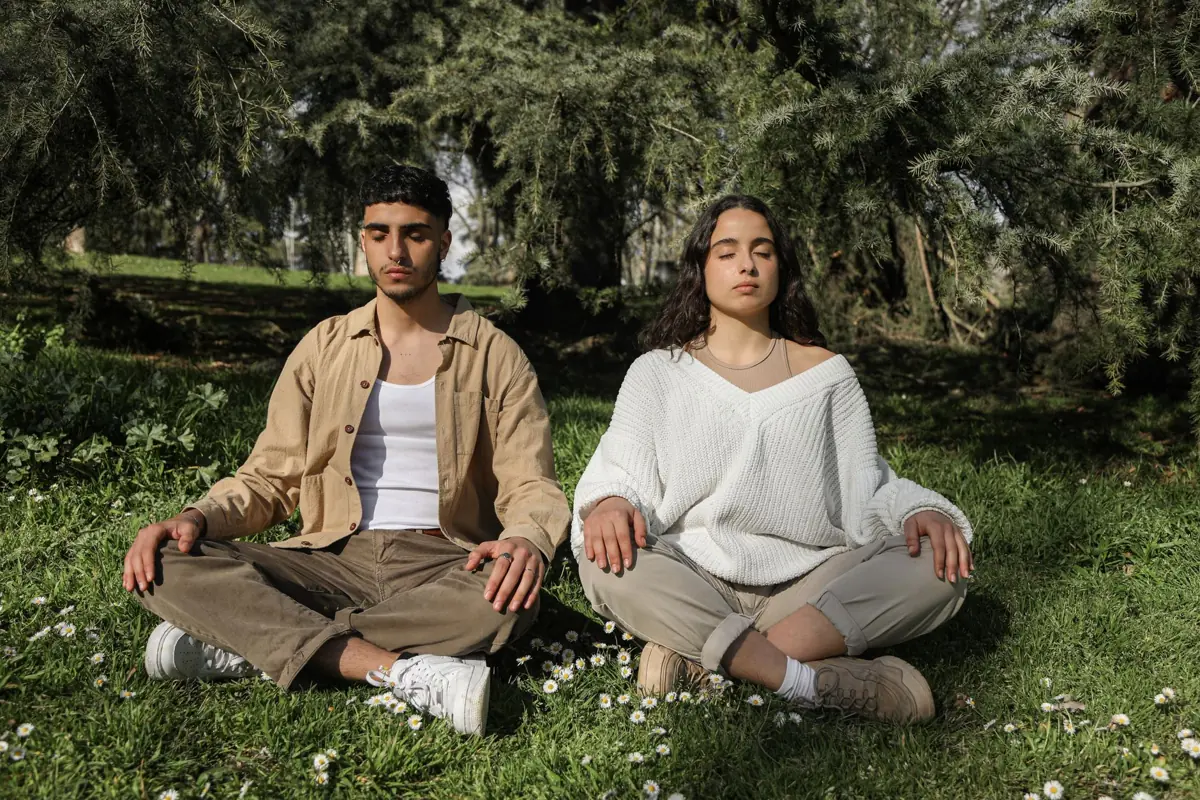
Mindfulness exercises give you a way to practice noticing the present moment. The aim is not to erase thoughts, force calm, or perform a perfect meditation. It is to notice where your attention has gone and gently bring it back.
Start with one brief exercise. Sitting, standing, lying down, and keeping your eyes open are all options. Adapt the practice to your comfort and abilities; you do not need special equipment, a particular posture, or an app subscription.
Key takeaways
- A wandering mind is part of the practice, not evidence that you are failing.
- Try a short session before making duration a goal.
- Use an external anchor if breath or body awareness feels uncomfortable.
- Mindfulness is an optional support, not a replacement for mental health care.
In this guide
- What mindfulness means
- 1. Notice the breath
- 2. Try a short body scan
- 3. Practice seated attention
- 4. Use a sensory anchor
- 5. Walk with attention
- Build a practice that fits
- Questions and adaptations
What mindfulness means
Mindfulness involves paying attention to what is happening now with curiosity rather than immediately judging it. You might notice a sound, a physical sensation, or a thought. When you become distracted, noticing that distraction is itself part of the exercise.
What the evidence does and does not show
Some mindfulness programs may help with symptoms such as stress or anxiety, but results vary and studies have limitations. NCCIH reviews the evidence and safety. Findings from a structured program do not guarantee that a few minutes of practice will produce the same outcome, and claims about “rewiring your brain” do not predict individual benefit.
Meditation can sometimes increase distress. If you feel more anxious, disconnected, or overwhelmed, stop or adapt the exercise. People with a trauma history or ongoing mental health symptoms may find guidance from a qualified professional helpful.
1. Notice the breath
Use your ordinary breath as an anchor. This is attention practice, not a breath-holding challenge or a test of how deeply you can breathe.
- Sit comfortably with support, or choose another position that works for you.
- Let the breath happen naturally. Notice air at the nose or the movement of the chest or abdomen.
- When a thought appears, silently note “thinking” if helpful.
- Return attention to the next ordinary breath without criticizing yourself.
- Finish after a short period and notice the room before moving on.
If watching the breath makes you anxious, choose sounds or the sensation of your feet on the floor instead. Keep your eyes open if that feels steadier. You do not need to change your breathing rhythm to practice awareness.
2. Try a short body scan
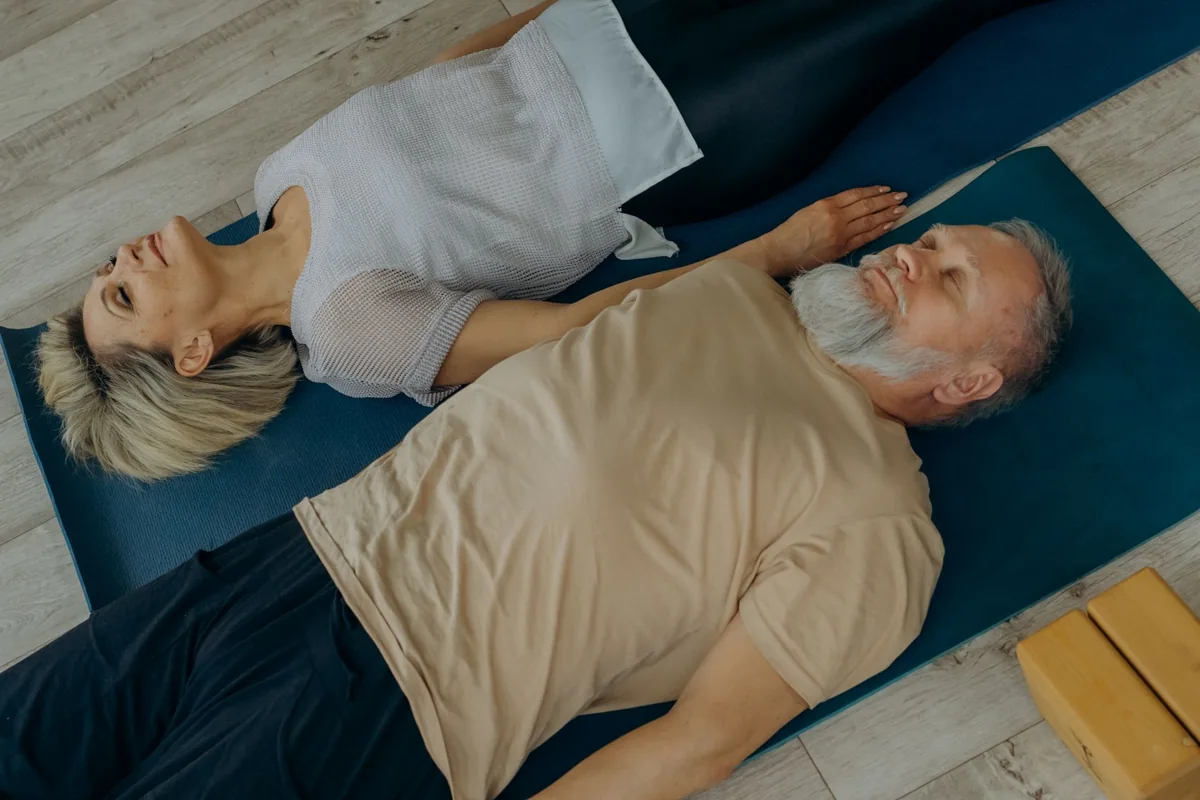
A body scan means moving attention through different areas of the body, not checking each area for something wrong. You can lie down or sit in a supportive chair.
- Notice the contact between your body and the chair, bed, or mat.
- Bring attention to your feet, then legs, hands, shoulders, and face.
- At each area, notice what is present: pressure, warmth, movement, or no clear sensation.
- Do not force a sensation or try to release every bit of tension.
- Return to a wider sense of the body and your surroundings.
Skip any area that feels painful or distressing, or stop the scan and look around the room. With chronic pain, the goal is not to tolerate more pain; adapt the practice and follow your care plan. If lying down makes you sleepy, sitting may work better.
3. Practice seated attention
Choose one anchor for a short seated session: ordinary breathing, nearby sounds, or the contact of your hands. A comfortable chair works just as well as a cushion; there is no need to sit cross-legged.
- Settle into a supported position without trying to stay rigid.
- Choose your anchor and notice it for a moment.
- When attention moves to planning, memories, or judging, recognize that it has moved.
- Return gently to the anchor. Repeat as often as needed.
- End by noticing your surroundings and deciding what you will do next.
A timer is optional. If watching the clock becomes distracting, use a short guided recording or simply finish when you are ready. The exercise is the return of attention, not uninterrupted concentration.
4. Use a sensory anchor

Everyday sensory details can be easier to notice than internal sensations. Pick an ordinary object or take in the room around you.
- Sight: Notice colors, shapes, and light without needing to label everything.
- Touch: Feel a safe texture, such as fabric or the surface of a chair.
- Sound: Notice a nearby sound and then a more distant one.
- Smell or taste: Include these only if available and comfortable; there is no need to seek them out.
The commonly used five-four-three-two-one sequence is one way to structure grounding, but exact counts are optional. Adapt to sensory differences. Never touch an unfamiliar plant, unsafe surface, or anything that might trigger an allergy just to complete an exercise.
5. Walk with attention

Mindful walking can be a practical alternative if sitting still is difficult. Choose a safe, familiar route and keep enough attention on traffic, footing, and other people.
- Begin at a comfortable pace rather than an artificially slow one.
- Notice a few steps: the contact of a foot, the shift of weight, or arm movement.
- Let attention widen to the surroundings.
- When you become absorbed in thoughts, return to a step or a sound.
- Finish normally; there is no need to reach a particular distance.
This can also be adapted to seated movement or a mobility aid. Noticing the movement of your hands, wheels, or the changing scenery is still attention practice. Avoid eyes-closed walking or exercises that distract from safe navigation.
Build a practice that fits
Choose one exercise and one convenient cue, such as after lunch or before opening a notebook. Start with a minute or two if that feels manageable. Longer sessions are optional, not automatically better.
| Situation | Possible adaptation |
|---|---|
| A busy day | Notice three ordinary breaths or sounds |
| Sitting is uncomfortable | Use a supported posture or safe walking |
| Body awareness increases distress | Try an external sound or object |
| You missed a day | Return when convenient without catching up |
If you want to keep notes, record the exercise, whether it was comfortable, and whether you want to try it again. Avoid treating a calmness score or a streak as the definition of success. Practice should not become another reason to judge yourself.
Questions and adaptations
Am I doing it wrong if I keep thinking?
No. Thoughts continue. Notice that attention has wandered and gently return to the anchor. You can do this many times during a single short session.
How long until I notice a benefit?
There is no guaranteed timeline. You may find an exercise useful, neutral, or uncomfortable. Evaluate the practice according to your experience rather than a promise about brain changes or a fixed number of weeks.
Can mindfulness replace therapy or medication?
No general self-help exercise should be presented as a replacement for an individual treatment plan. Discuss changes with your clinician. Seek support if anxiety, low mood, or other symptoms persist or interfere with everyday life.
What if I feel worse?
Stop, open your eyes if closed, and orient to the room. Choose a different activity or seek guidance rather than forcing yourself to continue. Urgent distress or inability to stay safe requires local emergency or crisis support.
Your first practice
Choose one ordinary sound and listen for a moment. When thoughts take over, notice that and come back. That is enough for a first practice; you do not need to turn it into a performance.