
The best protein powder for weight loss is not a fat burner. If you need a convenient way to add protein, choose a product that fits your dietary needs, the amount you actually use, your budget, and the rest of your food intake. If your meals already meet your needs, buying no powder is a reasonable choice.
This is a label-based buying guide for adults, not a hands-on taste test or a ranking of products proven to cause weight loss. You will find a practical shortlist, ingredient and allergen checks, worked cost examples, and a printable comparison sheet.
Start here: choose for the job, not the slogan
- Need a convenient protein ingredient? Compare the source, serving size, protein, and energy on the exact product label.
- Need a dairy-free option? Consider an appropriate plant product, while still checking allergens and cross-contact statements.
- Need something unsweetened? Look for a specifically unsweetened version; “unflavored” and “low sugar” do not answer every ingredient question.
- Need a meal replacement? A plain protein powder is not automatically a nutritionally complete meal or weight-management product.
- Have a health condition or a prescribed eating plan? Get an individual protein recommendation before adding a high-protein routine.
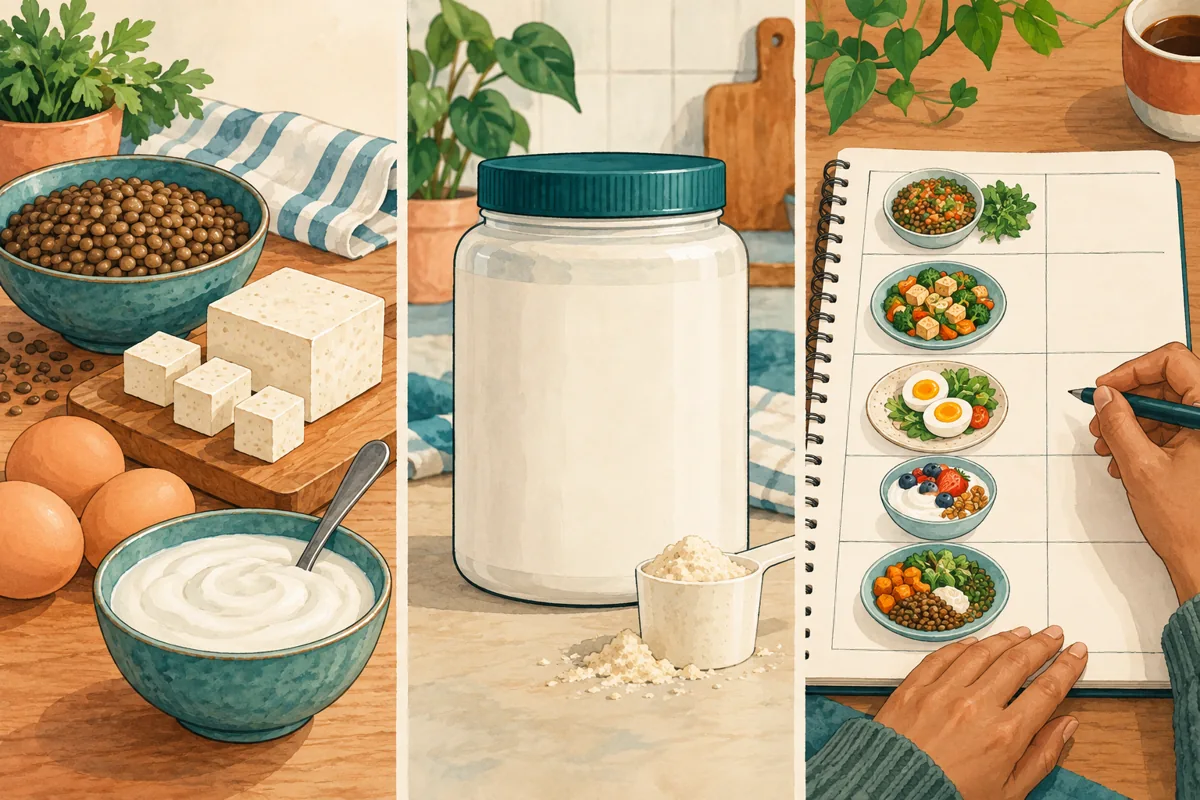
Jump to the product comparison or learn how to compare value. The relevant question is what the product helps you do—not whether it has “lean,” “diet,” or “metabolism” on the front.
What protein powder can—and cannot—do
Powder can make protein easier to include when cooking, appetite, access, or time makes food preparation difficult. It is still food energy. Adding a shake to an unchanged eating pattern does not automatically create weight loss, and its listed calories do not disappear because protein takes energy to digest.
The CDC’s weight-management guidance emphasizes an overall eating pattern, activity, sleep, and other individual factors. No brand in this guide has been shown here to produce a particular amount of weight loss. Taste, fullness, and digestive tolerance also vary; they cannot be responsibly scored from a product description alone.
Do not use a powder against its directions. For example, Dymatize’s ISO100 Gourmet Chocolate page says it is a food supplement and states, “Do not use for weight reduction.” That is a reason not to present it as a weight-loss treatment or an improvised meal-replacement plan.
Keep food in the comparison. Yogurt, tofu, beans, eggs, fish, and other suitable foods may fill the same practical gap while contributing different nutrients. Powder can be useful without being essential or superior.
Read the exact label in five steps
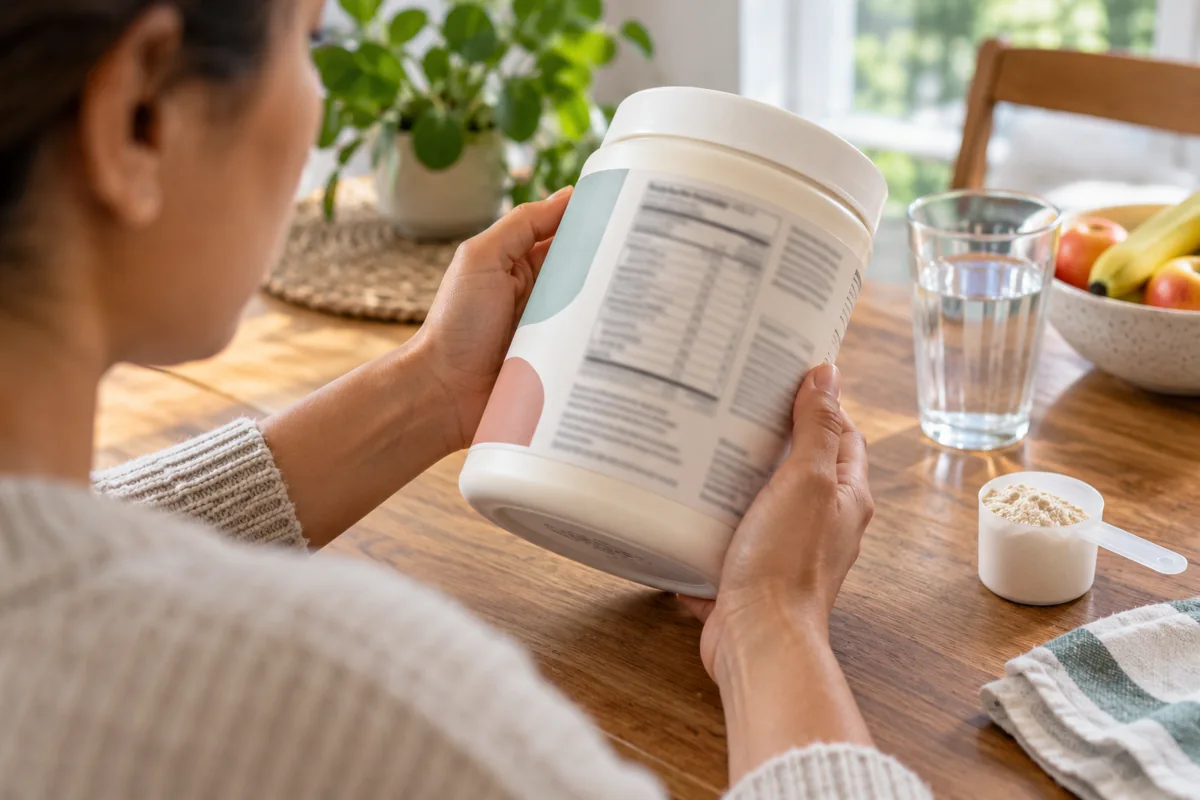
- Start with serving size. Check grams of powder and the number of scoops. One scoop from two different tubs may not be comparable.
- Read protein and energy together. Decide whether the amount fits your intended use. A rigid calorie cutoff does not tell you whether a product suits your whole day.
- Check ingredients and allergens. Look beyond the main protein to flavorings, sweeteners, added fiber, caffeine, and any other active ingredients.
- Separate powder from prepared drink. The nutrition for powder mixed with water may differ substantially from a shake made with milk and extras.
- Check use restrictions, quality information, and storage directions. A marketing claim is not a substitute for the instructions.
Read the label on the actual pack you will receive. Flavors, countries, serving sizes, and reformulations can differ even within one product range. Manufacturer pages below were checked on 19 October 2026; they are documentation, not our laboratory verification.
Whey, pea, soy, or a plant blend?
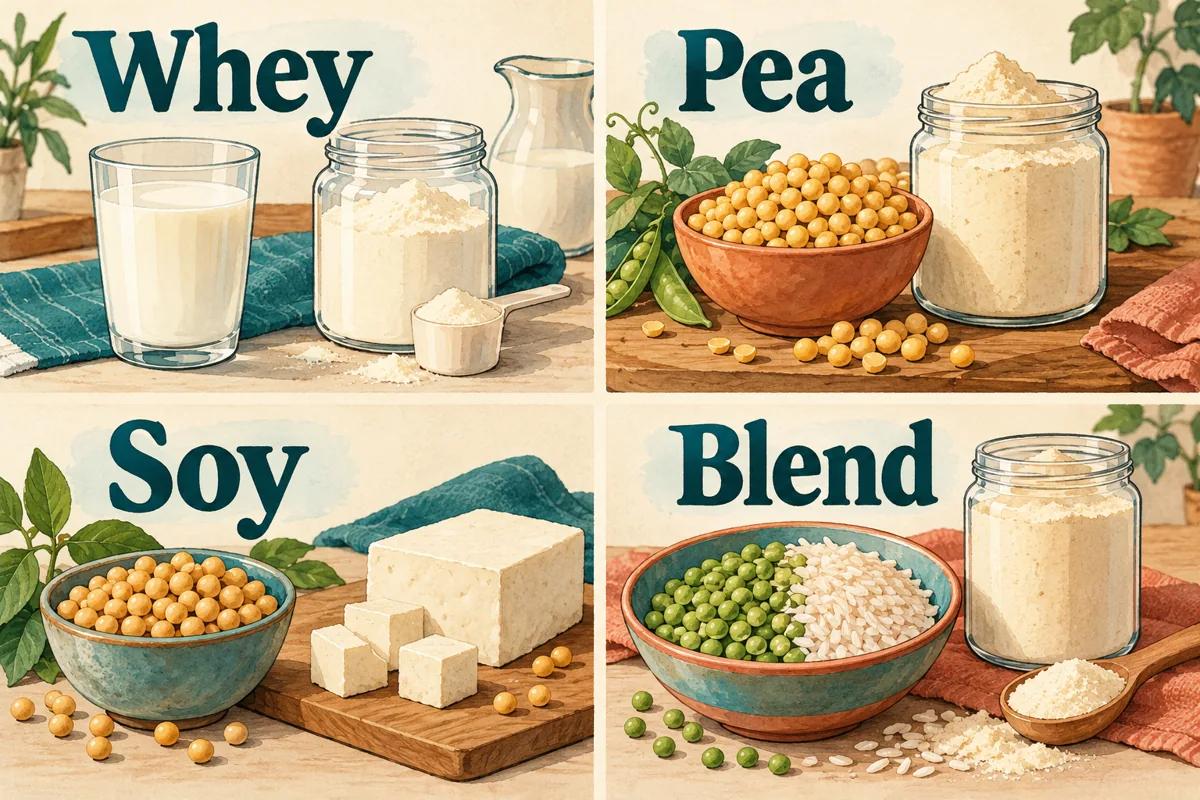
Whey is milk-derived. Concentrate, isolate, and hydrolyzed whey describe processing and composition, not a guaranteed ranking for fat loss. An isolate may have less lactose than another dairy product, but the exact amount and your tolerance still matter. Paying extra for faster absorption is not evidence that you will lose more weight.
Pea, soy, and plant blends offer non-dairy protein sources. Soy is an allergen; peas and other plant ingredients can also cause reactions. Added fiber or sweeteners may affect tolerance. A blend is not automatically better than a single-source product for your needs, and an organic label does not establish weight-loss effectiveness.
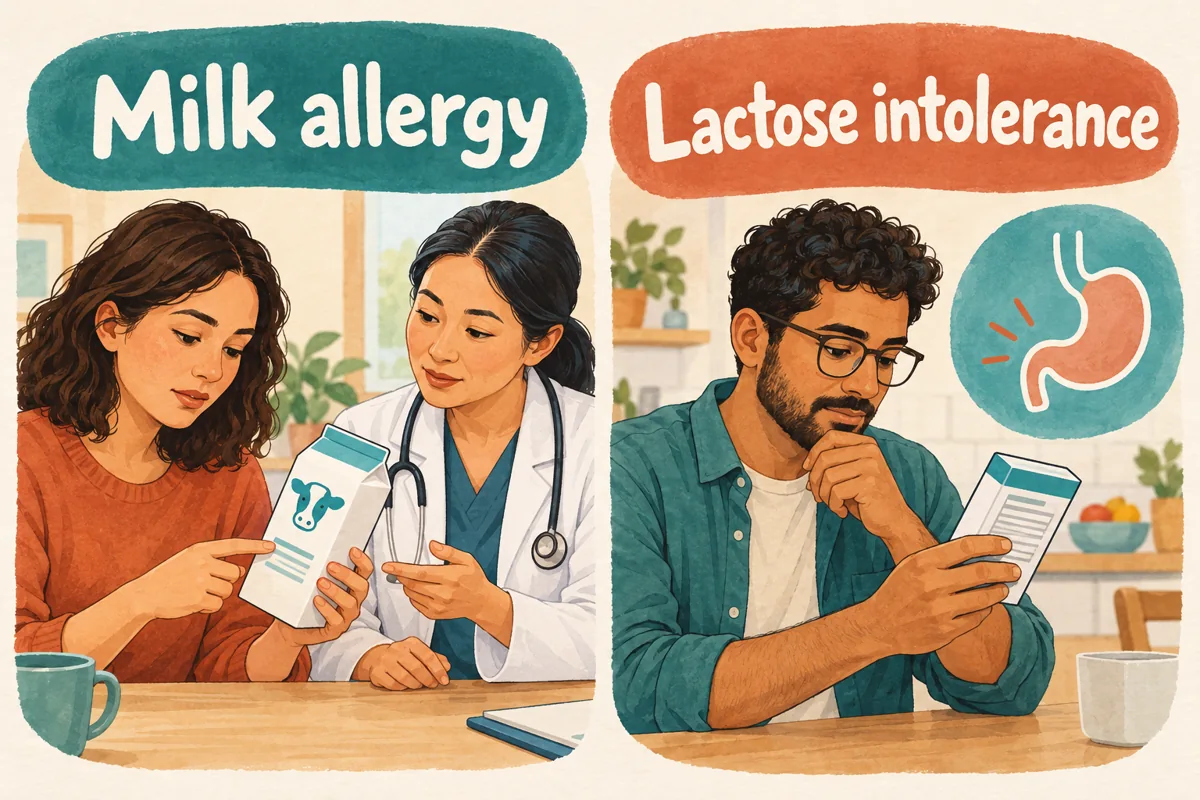
Milk allergy is not lactose intolerance. Lactose intolerance concerns digestion of milk sugar; milk allergy involves a reaction to milk proteins. Whey isolate is still milk protein and is not a workaround for milk allergy. The NIDDK lactose-intolerance guide discusses label checking and individual tolerance. Follow your allergy-care advice rather than relying on a “low lactose” claim.
If you have several food allergies, use the full ingredients and cross-contact information, and contact the manufacturer when needed. “Plant-based” is not the same as suitable for every allergy.
Six protein products to compare for different needs
These examples cover different sources and formulations. They are not ranked by fat-loss results, taste, or purity. There is no universal winner. Links go to manufacturer information so you can inspect the current formulation, local label, available sizes, and checkout price.
Table tip: on small screens, swipe tables sideways to view every column.
| Product example | Why consider it? | Main check before buying |
|---|---|---|
| Optimum Nutrition Gold Standard 100% Whey | A familiar flavored whey option | Milk ingredients and exact flavor label; not the same product as 100% Isolate |
| Myprotein Impact Whey Protein | Comparing concentrate-based options and pack sizes | Local formulation, flavor, serving weight, and one-time versus subscription price |
| Orgain Organic Plant Based Protein | A plant blend with flavored and unsweetened choices | Exact version, added fiber, sweeteners, and ingredients |
| Naked Pea Unflavored | A single-source, unflavored pea option | Pea suitability, serving weight, and whether the texture works for you |
| Isopure Unflavored Whey Protein Isolate | A plain whey ingredient for drinks or recipes | Milk suitability; unflavored and fortified flavored products differ |
| Garden of Life Raw Organic Protein Unflavored | An unflavored plant-based alternative | Full blend, added ingredients, and the specific pack’s nutrition panel |
Optimum Nutrition: check which “Gold Standard” product you mean
Gold Standard 100% Whey advertises 24g protein per serving and identifies whey isolate as its primary protein source. Do not confuse the name with the separate 100% Isolate range. Choose by the exact flavor’s label and your dairy tolerance, not an assumption that every whey product has identical ingredients or lactose content.
Myprotein: compare the current pack, not an old sale price
The checked US Impact Whey Protein page lists whey concentrate and notes that its nutrition information is based on the unflavored version; other flavors vary. Compare the local pack’s serving weight and final price. A temporary promotion, larger bag, or recurring order can change the apparent value.
Orgain: distinguish the product families
Organic Plant Based Protein is not the same as every Orgain meal, sport, or other powder. The checked page describes plant protein and added fiber; ingredients and preparation differ by version. If you do not want sweeteners, verify the specifically named Natural Unsweetened option rather than assuming the whole range is unsweetened.
Naked Pea: a short ingredient list is useful, not a guarantee
Naked Pea Unflavored lists yellow pea protein as its ingredient. That makes the source straightforward to identify, but it does not guarantee suitability, pleasant flavor, or zero contaminants. Buy a size you can reasonably trial, check any quality-program claim for the exact product, and avoid assuming flavored versions have the same ingredient list.
Isopure: plain does not mean dairy-free
Isopure Unflavored Whey Protein Isolate advertises 25g protein per scoop with no added flavors or sweeteners. It remains milk-derived. Do not transfer the vitamin/mineral claims of the flavored range to this plain product; read the selected version’s label. Zero-carbohydrate branding is not evidence of greater weight loss.
Garden of Life: inspect the blend rather than the “raw” claim
Raw Organic Protein Unflavored is another plant-based option. Read the full formulation and preparation information. Words such as “raw,” added enzymes, or probiotics do not by themselves prove better digestion, greater fullness, or fat loss. Compare the actual product with your intended use and tolerance.
How much should you use?
Start with your food intake and your own protein needs, not a rule that every adult needs two shakes or a bodybuilding target. Age, activity, health, energy intake, and the rest of your diet can change the appropriate amount. A registered dietitian can help when you need an individualized target.
The NIH exercise-supplement review discusses higher protein needs in athletic settings, but those are not automatically prescriptions for every person trying to lose weight. Protein from food and powder counts together.
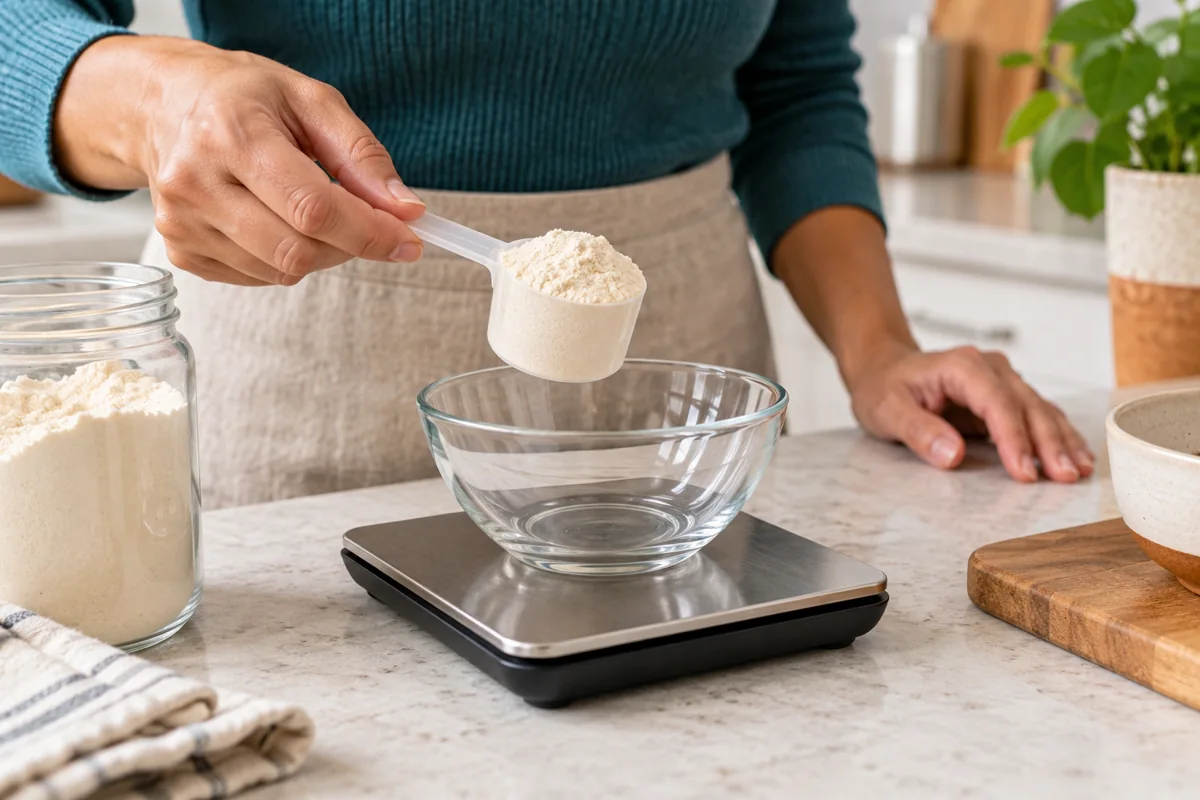
Illustrative gap calculation: suppose an individual plan calls for 90g protein and the person’s usual food provides about 75g. The gap is 15g—not automatically two full servings of powder. These numbers are a worked example, not a recommended target. The label can help work out an appropriate portion if powder is the chosen way to fill that gap.
A kitchen scale can make serving comparisons clearer when a scoop is inconsistent. It does not make the label a laboratory measurement of every scoop, and there is no need to force a larger portion simply because it fits in the bottle.
Count the whole shake—and consider the whole meal
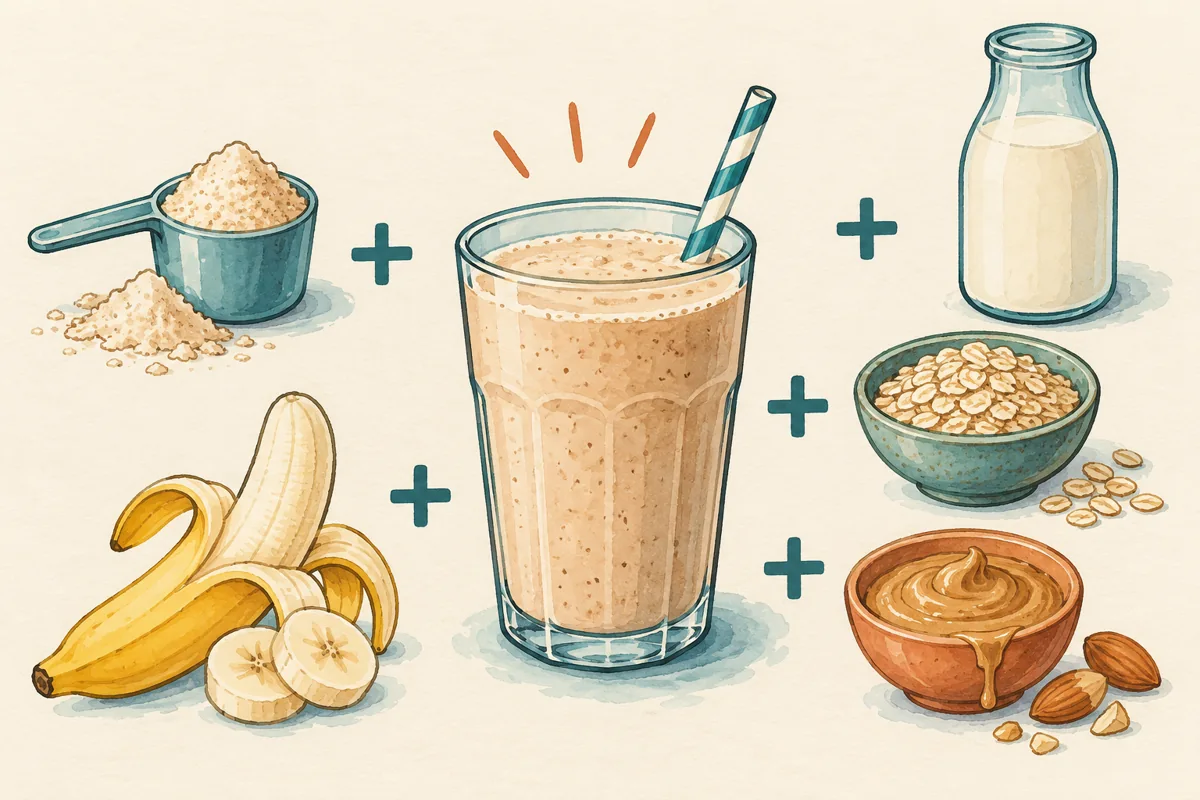
A shake made with water is different from one made with milk, fruit, oats, and nut butter. None of those ingredients is automatically bad; they simply belong in the total. Use the amounts and labels for your own recipe rather than copying a calorie figure from a product review.
Arithmetic example only: powder contributing 120 calories, a drink contributing 100, and extras contributing 180 make a 400-calorie prepared shake. The powder’s 120-calorie panel is not the total. These are hypothetical ingredients, not a recipe or calorie allowance.
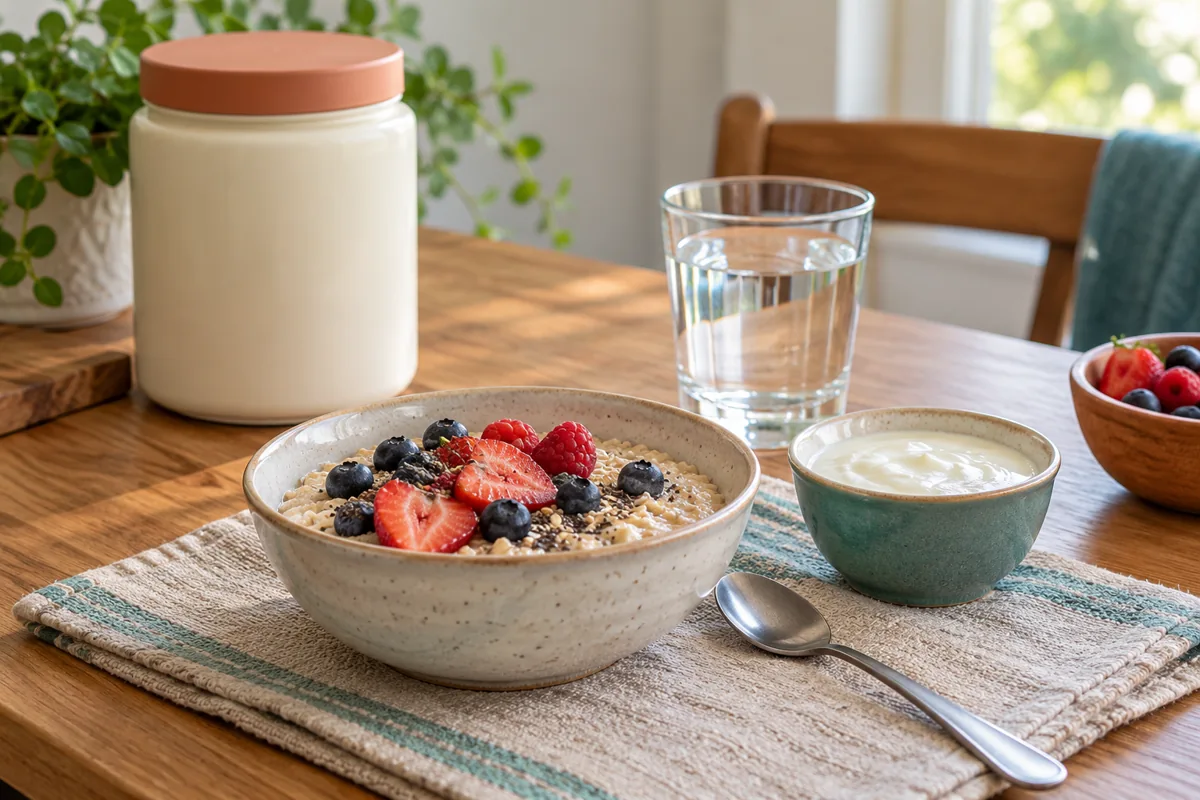
A protein-only drink is not automatically a balanced breakfast. Consider other foods, fiber, and overall adequacy rather than replacing meals simply because a shake is convenient. If a clinician has prescribed a meal-replacement program, follow that specific plan and product instructions.
Protein timing should fit the practical gap you identified. There is no universal breakfast advantage or narrow post-workout deadline that guarantees fat loss. A powder can also be mixed into suitable food if the label permits; it does not have to become an extra drink added to an already adequate day.
Compare value with two simple calculations

Cost per serving = total purchase cost ÷ servings in the pack. Then, if servings contain different protein amounts, compare a common amount: cost per 25g protein = cost per serving × 25 ÷ grams of protein per serving. The 25g here is a comparison unit, not a dose instruction.
| Hypothetical product | Cost and label | Calculated comparison |
|---|---|---|
| A | $30 for 20 servings; 20g protein per serving | $1.50 per serving; $1.88 per 25g protein |
| B | $40 for 30 servings; 25g protein per serving | $1.33 per serving; $1.33 per 25g protein |
Product B is cheaper on this narrow protein-cost comparison despite the larger tub price. That does not make it suitable for someone allergic to its ingredients. Use final checkout costs, and check shipping, tax, serving count, subscription conditions, and whether you will finish the pack. The numbers above are not current prices for the named brands.
Check quality claims without overreading them

Look up a claimed testing or verification program through its own directory and match the exact product. Programs have different scopes. For example, NSF Certified for Sport includes defined testing and certification requirements. A certification is not a guarantee of effectiveness, suitability for your health, absence of every possible contaminant, or weight loss.
For products sold as dietary supplements in the US, FDA does not approve them for safety and effectiveness before sale. Some powders are labeled as conventional foods rather than dietary supplements; check the actual label and do not interpret either format as an endorsement of fat-loss claims.
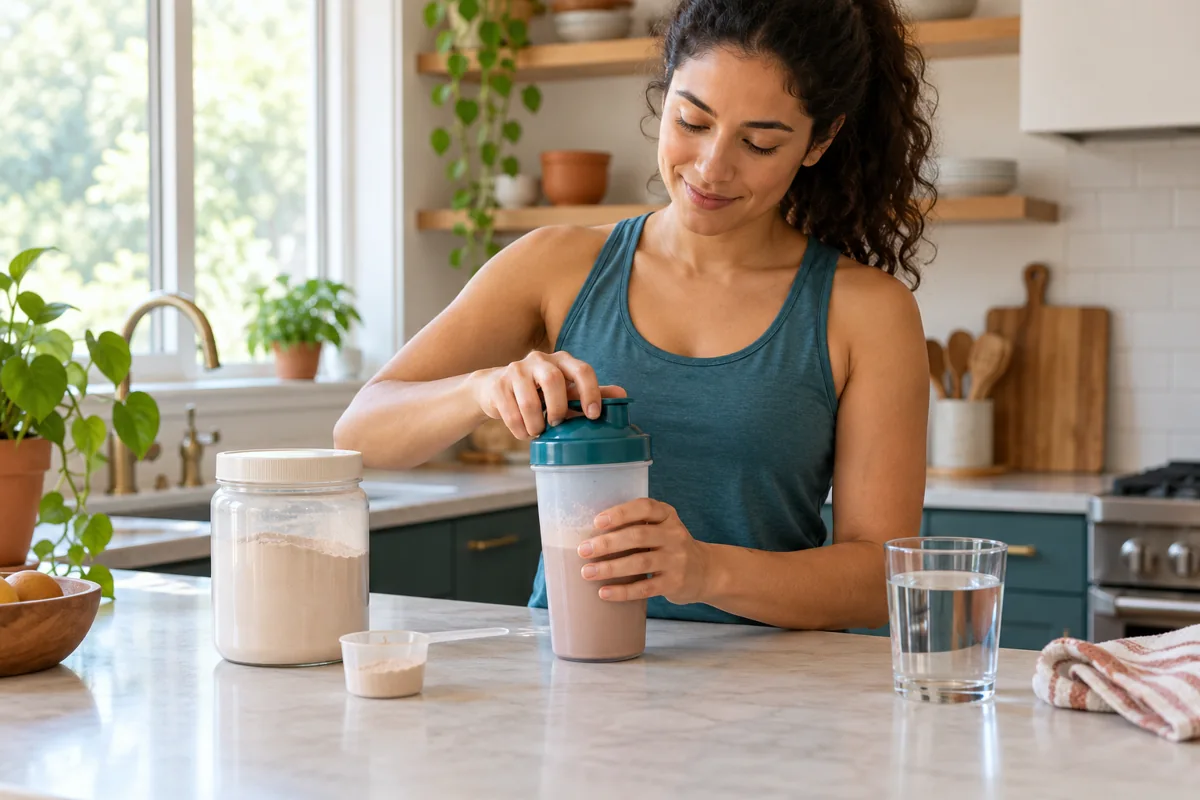
Follow the preparation and storage directions, clean the shaker, and avoid treating a large tub as an instruction to use it daily. Added stimulants, multiple supplements, or a fortified powder can complicate the choice. If you use a multivitamin too, check for overlapping nutrients.

If you have kidney disease, are pregnant, have an eating disorder or significant food allergies, or follow a medical eating plan, ask your care team before using this guide to change your intake. The NIDDK kidney-disease guidance explains why protein needs may require individual attention. There is no universal “drink several liters to protect your kidneys” workaround.
Stop using a product that appears to trigger a reaction and seek appropriate advice. Severe allergic symptoms need urgent help; recurring bloating or discomfort should not be dismissed as something you must endure to get results.
Your practical buying checklist
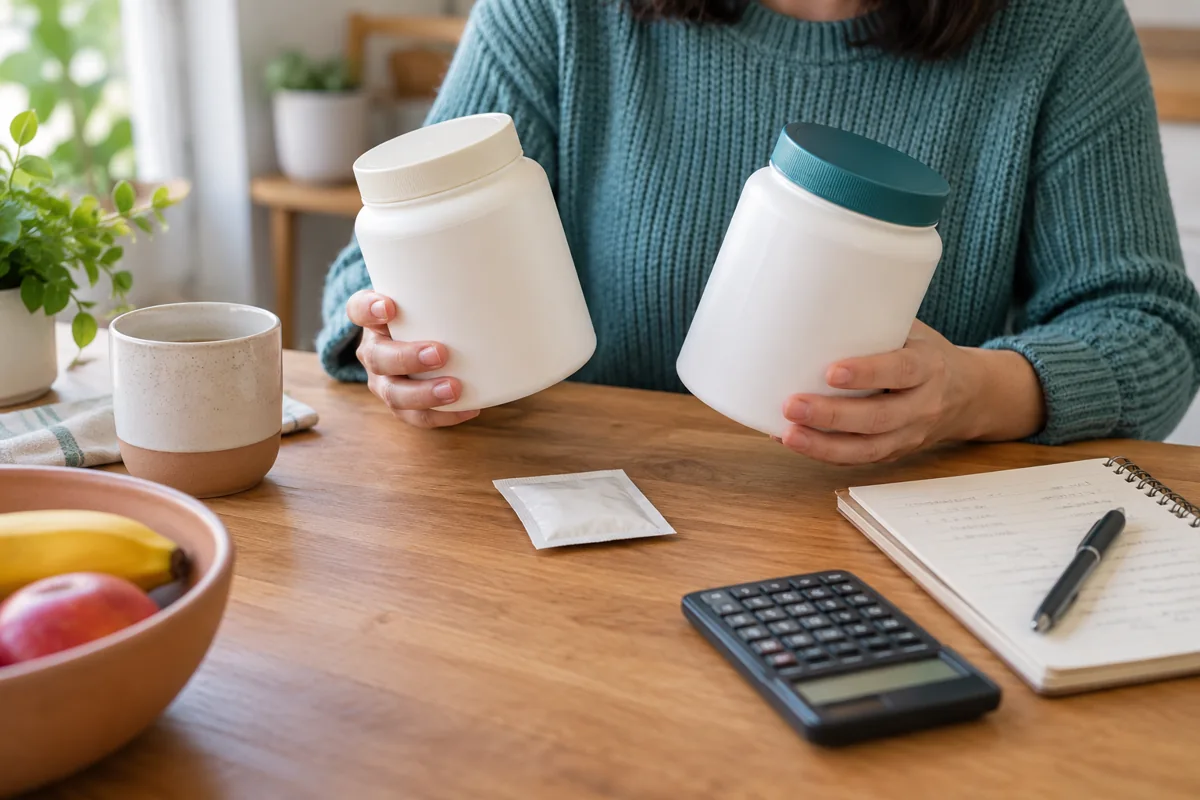
- Identify the gap and whether food could reasonably fill it.
- Check the exact source, serving weight, ingredients, allergens, and use restrictions.
- Compare the protein and energy of your actual portion and complete recipe.
- Compare final cost, pack size, testing claims, and purchase terms.
- Trial an appropriate small pack if available, rather than assuming a taste score predicts your experience.
Download the two-page protein-powder comparison worksheet to record two products and the whole-shake calculation. It is a decision aid, not a daily diet prescription.
Do I have to drink a shake every day?
No. Use depends on whether it serves a real dietary purpose. Occasional convenient use is not a failure, and you do not need to create a daily supplement habit when food already meets your needs.
Is whey better than plant protein for weight loss?
No universal weight-loss winner is established by this comparison. Choose by nutritional fit, allergy needs, tolerance, and practicality. A product’s absorption-speed claim does not establish a fat-loss advantage.
Must I buy zero-carb or sugar-free powder?
No. Those are product characteristics, not requirements for everyone. Check the full diet, portion, ingredients, and any individual clinical advice rather than judging a product from one number.
Bottom line: choose a suitable protein ingredient only if you need one. A readable label and realistic plan are more useful than a “fat-burning” score.
General nutrition information, not an individual diet or medical prescription. The additional images are AI-generated visual aids; generic packaging is not an actual product label. No hands-on product testing, independent laboratory analysis, or clinical weight-loss results are claimed. Sources checked 19 October 2026.