

Before she became “Doge,” Kabosu was a rescued Shiba Inu learning to feel safe in a new home. A photograph shared by her owner, Japanese kindergarten teacher Atsuko Sato, eventually turned that quiet family dog into one of the internet’s most recognizable faces.
Kabosu died on May 24, 2024. Remembering her means looking beyond the captions: at the adoption that changed her life, the ordinary blog post behind an extraordinary meme, and the communities that kept finding new meaning in her sideways glance.
About the images: The in-article illustrations are AI-generated conceptual scenes, not archival photographs of Kabosu, her owner, or actual events.
Key takeaways
- Kabosu was a female Shiba Inu adopted by Atsuko Sato in 2008.
- The famous photograph appeared on Sato’s blog in February 2010; Doge became a major internet phenomenon later, especially in 2013.
- Dogecoin borrowed its identity from the meme. Kabosu the dog, Doge the meme, and Dogecoin the cryptocurrency are related but distinct.
- Her age at death was commonly reported as 18, but her exact birthdate was unknown.
Who was Kabosu before she became Doge?
Kabosu lived with Sato in Sakura, Chiba Prefecture, Japan. Sato adopted her in 2008, long before the photograph became an internet calling card. Her story began with animal rescue, not a plan to create a famous pet.
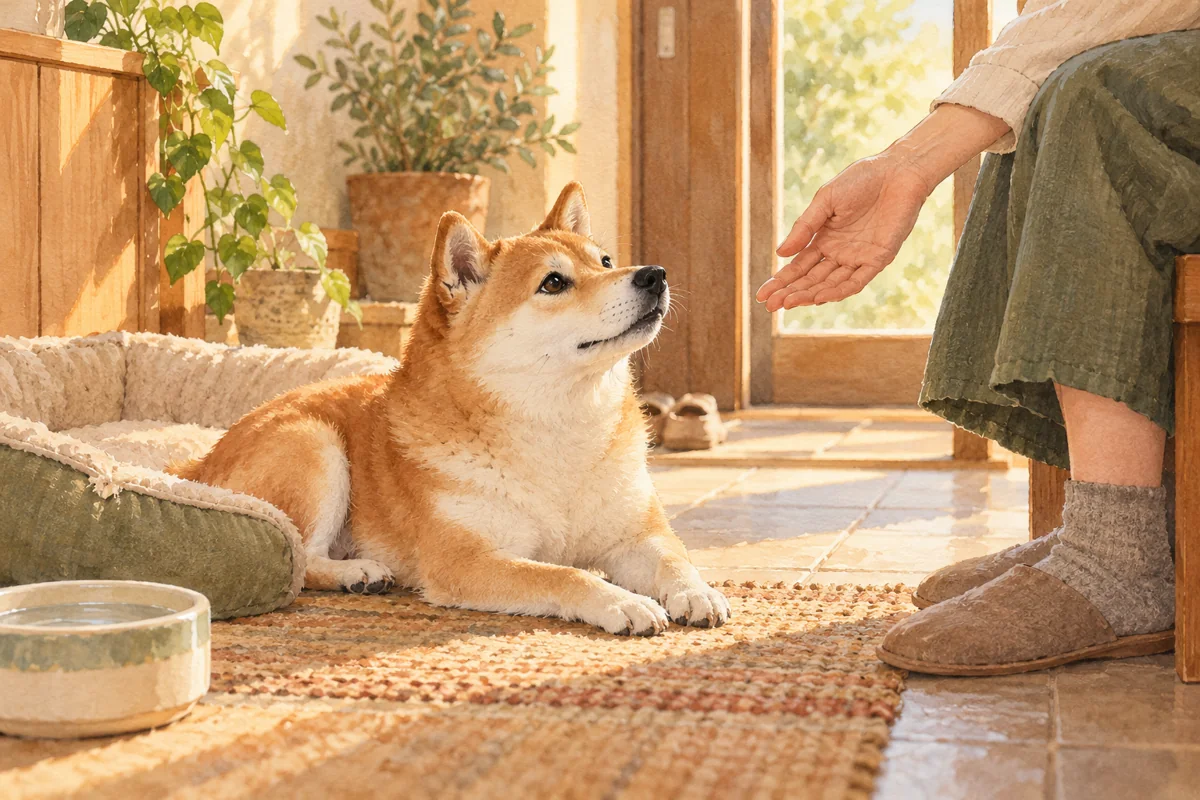
A small detail often gets retold incorrectly: Sato did not choose the name Kabosu. In a 2020 interview with Know Your Meme, she said the volunteer who rescued the dog had already named her. Kabosu is a Japanese citrus fruit; Sato thought the choice suited the dog’s round face.
The same interview describes a gentle, quiet companion who was initially wary of people. That is a useful counterpoint to the confident, knowing character audiences later imagined in the meme. A photograph can suggest a personality without giving us the whole animal.
Sato’s blog offered that wider view: a home, other pets, and everyday companionship. The remarkable part of the story is not simply that a rescue dog became famous. It is that the public image grew out of a life being documented and cared for.
The ordinary photograph behind an extraordinary meme
The source of the best-known Doge image is a February 13, 2010 post on Sato’s original blog. Its title translates roughly as “What’s for dinner tonight?” The entry belongs to the flow of family life, rather than a staged attempt at viral entertainment.
In the familiar picture, Kabosu sits with her front paws crossed and looks toward the camera from the side. To a human viewer, the combination can suggest surprise, skepticism, curiosity, or a private joke. Those are interpretations of the expression—not evidence that the dog was thinking the words later placed around her.
It is also worth separating two dates. The photograph was published in 2010; the meme did not arrive fully formed on that day. Images circulated, captions evolved, and the recognizable Doge format gathered momentum over the following years.
Seeing the original post helps restore some perspective. Before it was a reusable reaction image, it was a photograph of somebody’s dog, taken and shared by a real person. Sato’s authorship is part of the story.
Why did the Doge meme work?
The classic format pairs a Shiba Inu image with short, brightly colored phrases, usually in Comic Sans. Words such as “wow,” “such,” “much,” and “very” appear in deliberately unexpected combinations, as though the dog is narrating its own thoughts.

The joke comes partly from the mismatch: a very expressive face is given an oddly enthusiastic, imperfect inner monologue. There is no long setup to explain, and a few changed words can turn the same basic format into a reaction to almost anything.
That flexibility helps explain its appeal. Someone could recognize the structure without knowing Kabosu’s name, while another person could remake it for a particular hobby, situation, or online community. The examples in the illustration are original demonstrations of that pattern, not recovered historical memes.
From a family blog to a shared online language
By 2013, Doge had become a major feature of internet culture. Know Your Meme’s contemporary year-end review placed it first in its 2013 rundown and described both altered images and imagined inner-monologue captions.

Sharing also changed the relationship between the photograph and its audience. Many people encountered a remix before they ever encountered Sato’s blog. Doge became a recognizable character that could travel independently of the original context, even though Kabosu remained the real dog behind its most famous face.
Not every Doge image depicts Kabosu, and not every Shiba Inu circulating online is her. Keeping those distinctions makes the history clearer without taking away the humor.
How is Kabosu connected to Dogecoin?
Dogecoin grew out of the meme’s popularity. According to the project’s official history, Billy Markus and Jackson Palmer created it as a playful response to the seriousness surrounding cryptocurrency. It launched on December 6, 2013.
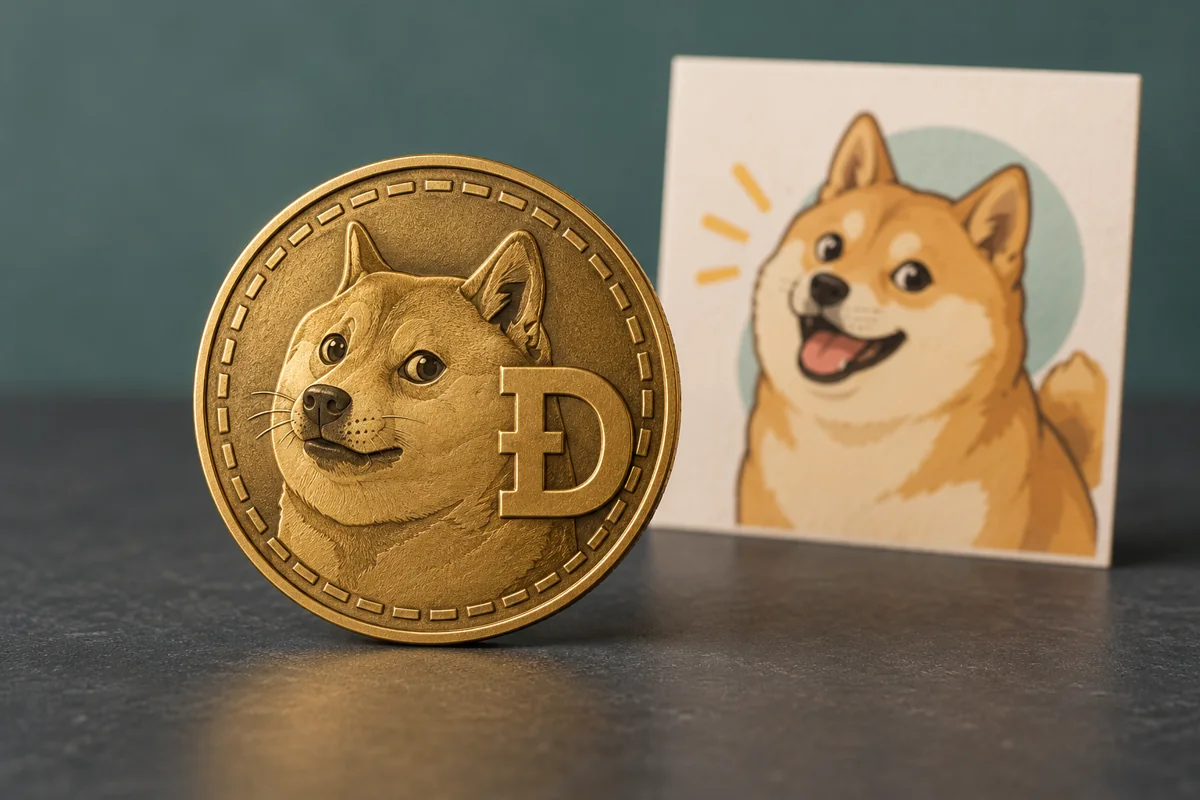
The name, dog imagery, and irreverent tone connected the project to Doge. That does not mean Sato created the cryptocurrency, or that Kabosu’s fame began with it. The direction of influence matters: the pet photograph came first, the meme developed around it, and the currency followed.
- Kabosu: the individual dog who lived with Sato.
- Doge: the meme character and caption style associated with her image and other Shiba Inu pictures.
- Dogecoin: a cryptocurrency inspired by that online culture.
The project’s history also records community fundraising, including support for the Jamaican bobsled team’s trip to the 2014 Winter Olympics and clean-water work in Kenya. These are examples of what a community built around a meme went on to do; they should not be confused with projects personally run by Kabosu’s owner.
Dogecoin is relevant here as part of internet history. Kabosu’s significance is not a claim about the currency’s price, usefulness, or investment prospects.
Kabosu’s story: a short timeline
- November 2, 2008: Kabosu joins Sato’s family. Sato later explains that this adoption anniversary became the dog’s celebrated birthday.
- February 13, 2010: Sato publishes the blog post containing the photograph that becomes central to Doge.
- 2013: Doge becomes a defining meme of the year.
- December 6, 2013: Dogecoin launches, drawing on the meme’s name and imagery.
- November 2, 2023: A fan-funded Kabosu monument is unveiled at Sakura Furusato Square.
- May 24, 2024: Sato announces Kabosu’s death.
The adoption anniversary comes from Sato’s November 2010 birthday post. That entry also explains why a precise birthdate should not be treated as established fact: Kabosu was a rescue dog whose real birthday and exact age were unknown.
When did Kabosu die, and how was she remembered?
In her May 24, 2024 farewell post, Sato said Kabosu died at 7:50 that morning, quietly, while being stroked. She thanked the people who had loved the dog and announced a farewell gathering for May 26 in Narita.
Her death was widely reported at age 18. That is the conventional reported age, rather than a precisely documented lifespan. Sato’s earlier explanation of the adopted birthday is an important qualification, not a reason to lose sight of the long life they shared.

The response extended beyond people who followed the family blog. The Dogecoin Foundation’s tribute acknowledged her influence and Sato’s use of that attention to support awareness of animal rescue and adoption.
A physical tribute already existed before her death. Sakura City’s November 2023 announcement records the unveiling of the fan-funded monument, along with a table and benches, at Sakura Furusato Square. Unlike a caption that can be copied instantly, it gave that shared affection a place in the city where she lived.
Remembering the dog, not just the reaction image
Kabosu’s story has two scales. On one, there is a recognizable internet face: endlessly captioned, remixed, and used as the identity of a cryptocurrency. On the other, there is a rescue dog, a caregiver, and years of ordinary life together.
The second scale is what keeps the first from becoming the whole story. Her rescue background matters. So does the person who photographed her, shared her daily life, and cared for her after the meme had traveled far beyond their home.
A thoughtful tribute can hold both together: enjoy the joke, credit the original source, and remember that the animal in a viral image is more than a character. Kabosu did not need to understand internet fame to become part of people’s lives.
Common questions about Kabosu
Was Kabosu a Shiba Inu?
Yes. She was a female Shiba Inu living in Japan with Atsuko Sato. “Doge” was the internet identity associated with her famous image, not her breed or her original name.
Did Sato name her after a fruit?
The name refers to a Japanese citrus fruit, but Sato said a rescue volunteer had named Kabosu before she arrived in the family. The distinction comes from Sato’s own interview account.
Was November 2 her actual birthday?
It was her celebrated birthday and the anniversary of joining Sato’s home. Her exact date of birth was not known.
Did the Doge meme start with Dogecoin?
No. The photograph was published in 2010, and the meme was already popular when Dogecoin launched in December 2013.